
Who doesn’t love a good cocktail? From refreshing margaritas to smooth, subtly sweet espresso martinis, Brits are increasingly opting for cocktails over other alcoholic beverages – but at what cost?
As much as we admire the art of the cocktail, we’re also highly aware of the carbon footprint that some of our favourite drinks leave behind.
The hospitality blog of catering equipment company Alliance Online recently looked into the greenhouse gas emissions produced by several of the UK’s most popular cocktails, and found that, unsurprisingly, drinks that contain multiple ingredients imported from afar are the worst offenders.
The worst of the cocktails they looked at was the piña colada at 690g of CO2e, with all of its ingredients – pineapple juice, coconut cream, white rum and pineapple – producing more than 100g of CO2e each. According to Alliance Online, five piña coladas “produce enough carbon emissions to drive 8.6 miles in a petrol-powered car or charge 420 smart phones”.
High CO2e emissions are caused by a range of factors, from the distance that products have had to travel to get to the UK to how they’re made and packaged.
Naturally, reducing the number of ingredients used – by eliminating garnishes, for example – and opting for local products wherever possible are two great ways cocktail lovers and restaurant and bar owners can reduce their carbon footprint when making cocktails.
As Alliance Online notes, garnishes are “often merely there for decoration and are thrown away once the drink is finished”, making them easy to exclude without sacrificing an ounce of flavour.
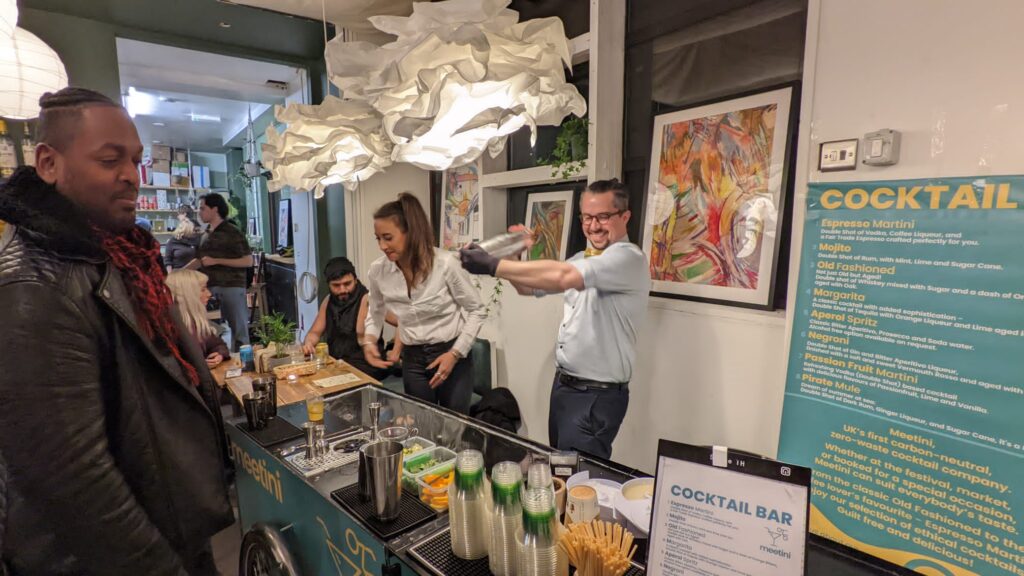
At Meetini, we looked at all aspects of the cocktail-mixing process to determine how to make our drinks as Earth-friendly as possible. Aside from serving our cocktails without garnishes, we also produce most of our spirits in-house – thus drastically reducing the air mileage that our drinks rack up. We’ve also opted for reusable glass bottles over disposable containers and use sustainable transportation methods – primarily e-cargo bikes – to deliver and serve our cocktails, which further reduces their negative impact on the environment.
Cocktails may not inherently be the most sustainable of beverages, but it doesn’t have to be that way! With small changes like the ones we’ve put into place, protecting the environment – while simultaneously enjoying a delicious cocktail – is easier than ever.