
As of 2022, consumers are more concerned about climate change than ever before. Unfortunately, they’re also placing increasing importance on convenience when shopping – a feature that hasn’t traditionally lent itself to sustainability.
Online shopping – be it hot food or retail products – has been called a “disaster” for the environment. As transport studies expert Julian Allen noted in the Guardian, it is “sheer inefficiency to move a single meal in a car or motorbike” – especially when that car or motorbike is being powered with fossil fuel.
Thankfully, retail and food service industry innovators have been working hard to introduce alternatives to traditional delivery methods. Read on for examples of these alternative methods, and to discover some of the companies that are already using them.
Electric cargo bike delivery
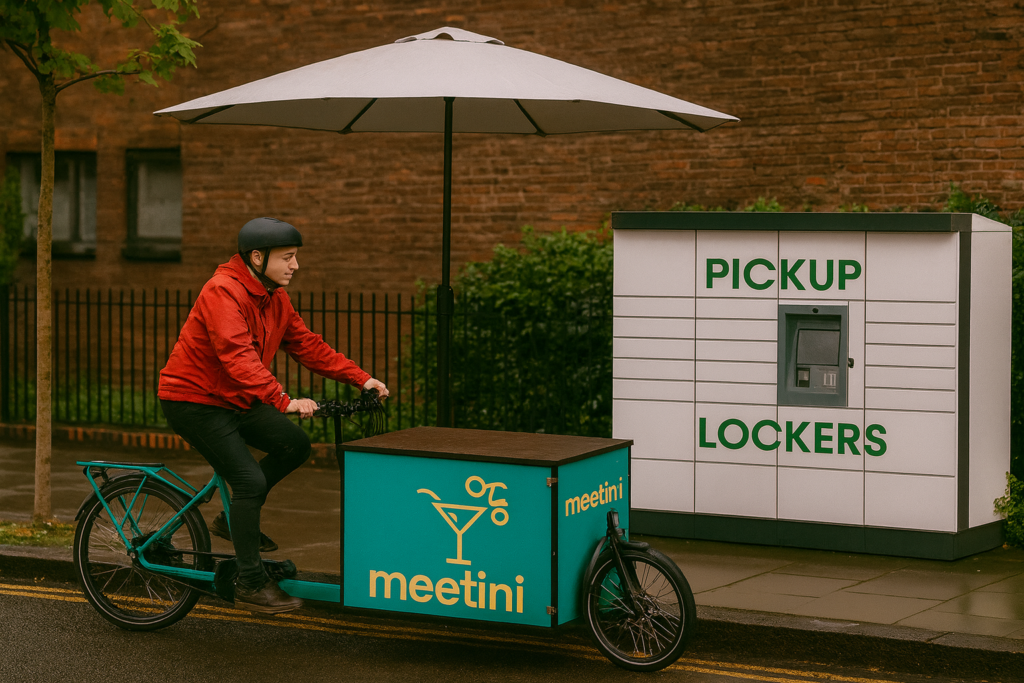
E-cargo bikes are powered by electricity rather than petrol, which makes them a sustainable alternative to traditional gas-powered vehicles – especially in situations where a regular bicycle just won’t cut it. Electric cargo bicycles are designed to maintain balance while transporting heavy goods, all while moving quickly and without placing strain on the driver. They are also more maneuverable than cars, making them ideal for city centres.
Many companies have already adopted electric cargo bikes to replace traditional methods of delivery, including yours truly. Our e-bikes allow us to easily navigate London’s crowded streets to deliver our cocktails and spirits to eager customers throughout the city (while satisfying our commitment to sustainability).
Electric delivery vans and cars
Electric vehicles may have a greater upfront cost than their petrol-powered counterparts, but that hasn’t stopped many companies from adopting them for last-mile transport in response to growing consumer demand for environmental responsibility (not to mention rapidly rising petrol prices). Many major corporations (even those that are not traditionally known for their commitment to sustainability) have pledged to adopt electric vehicles in recent years in an effort to reach carbon neutrality.
Pickup points and delivery lockers
One of the most damaging facets of the world’s love affair with online shopping is the extra mileage that results from stopping at the home of every single person who’s ordered something. Pickup points and delivery lockers – which are offered by many of the UK’s major delivery services and online shopping platforms – have been shown to significantly reduce carbon emissions, and are often more convenient than home delivery, as they don’t require customers to be home at the time of delivery.
Of course, there are ways to reduce the potentially harmful effects of online shopping that go beyond the mode of transportation, from using sustainable packaging (like Meetini’s refillable bottles) to making returns easy and efficient. Companies that are doing all three? Even better!